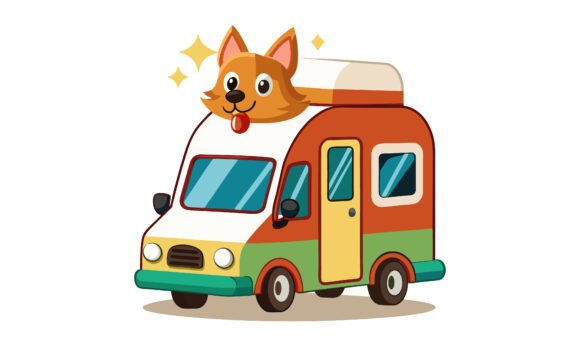
Cute Dog Character Camper Van Travel: A Review
I download a lot of design files. Some are technically perfect but emotionally flat. Others have tons of personality but turn into a thread-laced nightmare the moment they hit the hoop. When I pulled up the Cute Dog Character Camper Van Travel set from the Crafts section, I was curious how its cut-file origins would translate into the world of machine embroidery. The subject—a cheerful dog behind the wheel of a retro camper—immediately struck me as a winner. It taps into two powerful markets: pet lovers and travel enthusiasts. As a designer who regularly converts SVG and EPS design assets into stitched reality, I look past the surface appeal to evaluate whether a graphic can truly hold up to thread, stabilizer, and the occasional trip through the wash.
First Look: A Story Worth Stitching
The design’s charm lies in its clean, graphic nature. It isn’t overly detailed, which is a massive advantage for an embroidery project. The shapes are distinct: the dog’s happy face, the van’s rounded body, the oversized wheels, and the travel-themed background elements. This clear segmentation makes it an ideal candidate for an applique design, where each color block can be a separate piece of fabric, or for a straightforward fill stitch and satin stitch conversion. The mood is joyful, whimsical, and evokes a genuine sense of wanderlust. It feels like it belongs on a high-end boutique children’s clothing line or in a trendy pet supply shop. The layout is well-centered, which gives you flexibility in placement, whether you are working on a tote bag design or a left-chest sweatshirt embroidery.
Real-Life Test: From Cut File to Embroidered Product
I decided to run a thorough test for an upcoming Etsy launch. I wanted to offer a custom embroidered tote bag and a matching unisex sweatshirt. The first step was bringing the SVG file into my digitizing software to create a dedicated embroidery file for my machine. The scalability of the vector format is a blessing here. I bumped the size to fit a standard hoop size (roughly 5x7 inches) while keeping the dog’s expression crisp. I chose a classic retro teal for the van body, a warm cream for the dog, and a dense black for the tires and dog’s nose.
The digitizing process was smooth. The large, open areas handled a basic fill stitch beautifully. The thin lines of the camper trim were perfect for a narrow satin stitch or a triple-run running stitch. When I transferred the design to my machine and stitched it out on a mid-weight cotton twill tote, the results were excellent. The visual appeal was immediate. The dog’s face was recognizable and endearing. The thread colors popped against the natural canvas background. It looked exactly like a premium boutique product, not a generic iron-on transfer. This is exactly the kind of handmade product that builds customer trust and encourages repeat business.
The Perfect Canvas: Tote Bags, Sweatshirts, and More
After my initial test, I experimented with a few other surfaces. Here is where the Cute Dog Character Camper Van Travel design truly shows its range:
- Custom Apparel: A left-chest placement on a classic sweatshirt or a back-center design on a t-shirt looks wonderful. The graphic nature of the design reads well even at a distance.
- Baby Embroidery & Kids’ Items: The friendly dog character is perfectly suited for baby embroidery on onesies, rompers, or small blankets. Just be sure to scale the design appropriately for tiny garments.
- Embroidered Patch: Because the color blocks are distinct, it digitizes into a fantastic embroidered patch. Use a dense satin stitch for the border. These patches sell incredibly well at craft fairs or as add-ons in an Etsy shop.
- Home Decor: I tested it on a simple linen pillow cover and a flour sack kitchen towel. It adds a playful, welcoming touch to the kitchen or a child’s nursery.
Where This Design Shines Brightest
For small shop products and Etsy sellers, this design is a goldmine. It works beautifully as a personalized gift for a travel-loving dog owner. Think about the commercial embroidery potential: matching sets for a family road trip, custom dog bandanas, or even a line of holiday embroidery gifts. The design brings a sense of joy and professionalism to your craft business. It enhances product value because it looks like a thoughtful illustration, not a clipart thrown into a hoop. If you are creating digital product previews or printable mockups for your Etsy listings, this design photographs beautifully and helps with buyer engagement. Customers can instantly see themselves using the finished product.
Crucial Considerations Before You Hoop
No design is perfect for every single situation, and I’d be remiss not to point out where this file needs careful handling. Because it originated as a Silhouette cut file (SVG/EPS), the stitch paths are not pre-determined. This gives you control, but also responsibility.
- Small Hoop Sizes: If you drop the design width below 4 inches, the dog’s facial features (eyes, nose, mouth) can easily become muddled. The fine details need enough real estate to accommodate a clean satin stitch or a precise running stitch. Always test the smallest size on scrap fabric first.
- Fabric Texture & Stretch: On highly textured fabrics like heavy fleece or stretchy knits, the design can distort. You must use a high-quality cutaway stabilizer and possibly a temporary spray adhesive to keep everything flat.
- Dark Fabric: If you are stitching on dark fabric (navy, black) with lighter thread colors, the thread color contrast must be checked. You may need a white bobbin or a light underlay to prevent the dark fabric from shadowing through the fill stitches.
- Curved Surfaces: For a cap or a curved surface, use a scaled-down version of the design and a stiff, no-give stabilizer to prevent the stitches from puckering or distorting around the seams.
- Stitch Density: When digitizing, review the stitch density of your fill stitch areas. Too dense, and the fabric will pucker. Too loose, and you’ll see the fabric peeking through. A density of around 4.0mm to 4.5mm is usually a safe starting point for medium-weight fabrics.
Practical Designer Notes for Digitizing
Before you commit to a bulk production run, here are my practical recommendations based on my test runs:
- Test on Scrap Fabric: This is non-negotiable. Stitch out the design on the exact fabric you plan to sell. Check for tension issues, thread breaks, and overall stability.
- Review the Stitch Paths: Because SVG files don’t have stitch data, check your digitizing software for long, ugly jump stitches between color blocks. Trim these paths to keep the back of your embroidery project clean and wearable.
- Use a Mockup: Create a black and white mockup first to ensure the shapes stand out without relying on color. Then, colorize it. This helps catch contrast issues early.
- Check Your License: Before you start selling finished products or using the design for commercial embroidery, always confirm the license terms of the original SVG and EPS design assets. Some licenses limit the number of uses or strictly govern commercial sale. Protect your small business by knowing the rules upfront.
- Thread Color Selection: The design lends itself to retro palettes. I found that a teal, cream, and black combination was a guaranteed hit. A bright red van with a golden dog works well for a more playful, candy-colored aesthetic.
Final Verdict: Is It a Buy for Your Craft Business?
Overall, the Cute Dog Character Camper Van Travel design is a delight to work with. It bridges the gap perfectly between a charming graphic and a functional machine embroidery design. It enhances the perceived value of any handmade product it decorates, from a simple tote bag design to a complex sweatshirt embroidery. For the creative entrepreneur or dedicated maker looking for a design that brings joy, professionalism, and solid commercial potential to their work, this is a practical and worthwhile investment. It’s a versatile, crowd-pleasing graphic that, with the right digitizing care, will stitch out into a real winner for your embroidery project. Just do your due diligence on sizing, stabilizer, and licensing, and you will have a high-quality finished product that your customers will love.