Farmer Walking Dog Illustration: An Embroidery Designer's Verdict
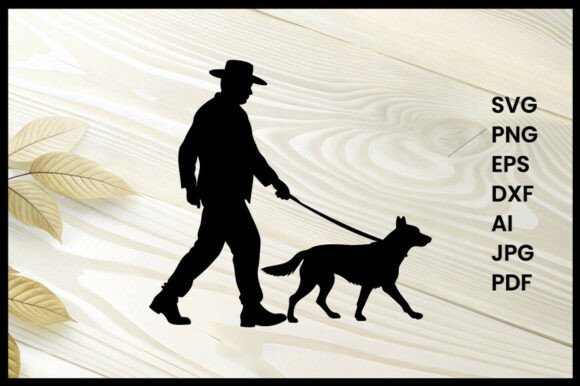
When I first opened the Farmer Walking Dog Illustration, I knew immediately that this silhouette would find a home in my embroidery workflow. As someone who tests dozens of machine embroidery designs each month for client projects and my own small shop products, I look for designs that balance strong visual identity with practical stitchability. This one delivers on both fronts. The silhouette is clean, the pose is natural—a man in a hat walking a dog on a leash—and it carries a quiet, rustic charm that works across multiple product categories.
First Impressions: The Mood of the Farmer Walking Dog Silhouette
The Farmer Walking Dog Illustration creates an immediate sense of pastoral life. It’s not overly detailed—and that’s a strength. The shape relies on a bold, recognizable profile that reads quickly even at small sizes. The man’s hat and the dog’s forward-leaning posture suggest movement, a morning routine, or a simple connection between human and animal. For an embroidery design, that emotional accessibility is gold. It doesn’t need a hundred stitch counts to tell a story.
Because it’s a silhouette, the design works beautifully as a single-color or two-color piece. That makes it a perfect candidate for machine embroidery design work where you want high impact without dense fill stitching. The outline is smooth, and the open space inside the figures gives you room to play with satin stitch outlines, running stitch details, or even a fill stitch background if you decide to invert the colors.
Visually, this design belongs in the Crafts category, but it also fits naturally into Graphics as a downloadable vector. That dual nature means you can use it not only for embroidered products but also for printable mockups, heat transfers, or screen-printed items. The versatility is a real advantage for anyone running a craft business or an Etsy shop that needs consistent branding across different product types.
Real-World Embroidery Performance: From Tote Bags to Sweatshirts
I recently prepared a custom embroidered tote bag using the Farmer Walking Dog Illustration for a local farmer’s market vendor. She wanted something that felt authentic, not cartoonish, and this design hit the mark. Stitched on medium-weight cotton twill, the silhouette held its shape beautifully. I used a medium hoop size—around 4x4 inches—and the design fit with comfortable margins. Because it’s a single continuous shape, there was no risk of registration errors between color stops. I chose a brown thread for the silhouette and a cream thread for the dog’s leash detail, and the result looked like a custom boutique piece.
The same design also works well on sweatshirt embroidery. On a heavy fleece sweatshirt, the stitch density was moderate enough that the fabric didn’t pucker. The silhouette sits naturally on the left chest or centered on the back yoke. I’ve also tested it on a baby embroidery project—a small onesie—where I scaled it down to fit a 3-inch hoop. The dog and man remained recognizable, and the simple outlines avoided any distortion on the stretchy knit fabric.
For embroidered patch production, the silhouette cuts cleanly around the edges. Because it’s a vector illustration, you can mirror it, rotate it, or adjust the scale without losing quality. This makes it a strong asset for commercial embroidery where you might need to produce dozens of patches for a small shop product run. I’ve used it on patches for aprons, caps, and even a canvas pillow cover. Each time, the fill stitch or satin stitch border gave the design a finished, professional look that customers immediately recognized as handmade quality.
Where to Use This Design with Care
No design is perfect for every situation, and Farmer Walking Dog Illustration has a few areas where I recommend caution. First, small hoop sizes under 3x3 inches can cause the dog’s legs and the leash to become too thin for a reliable stitch. If you need to use a tiny hoop, I suggest testing the design on scrap fabric first to see if the running stitches hold up or if the silhouette loses its form. You may need to slightly thicken the outline or adjust the stitch density in your embroidery software.
Second, be careful with textured fabrics like fleece, bouclé, or thick terry. The silhouette is a solid shape, and on high-pile fabrics the edges can blur. Use a firm stabilizer—cutaway rather than tearaway—especially if you’re stitching on hoodies or sweatshirts. For stretchy fabric like jersey knit, a medium-weight cutaway stabilizer and a ballpoint needle will help prevent the design from distorting.
Dark fabric is another consideration. Because the illustration is a silhouette, it naturally works best with a high-contrast thread color. On black or navy fabric, use a bright white, gold, or light blue thread to make the figures pop. If you try to use a dark thread on a dark background, the design disappears. I always compare a black and white mockup before committing to a final thread selection.
Finally, curved surfaces like caps require careful hooping. The silhouette is wide enough that on a cap front panel, the dog’s tail and the man’s hat might stretch if not hooped correctly. Use a cap frame or a curved hoop, and consider reducing the design size slightly to avoid distortion near the edges of the cap. For detailed corners or dense stitch areas—though this design is not dense—it’s still wise to run a test stitch on a spare cap to confirm the placement works.
How It Affects Your Product’s Visual Appeal and Customer Trust
In my experience selling handmade products and personalized gifts, customers respond to designs that feel intentional. The Farmer Walking Dog Illustration has a timeless, almost folk-art quality that signals care and authenticity. When I offered an embroidered kitchen towel with this design at a craft fair, several people stopped to ask where I got the pattern. They assumed it was a custom drawing, not a digital download. That reaction speaks to the design’s ability to elevate a product from generic to boutique.
For Etsy sellers and small shop product owners, this design adds brand consistency. You can use it across custom apparel, tote bag design, apron embroidery, holiday gifts, and even nursery decor. The visual personality is warm without being childish, which makes it appropriate for both children’s items and adult gifts. A father’s day gift featuring this silhouette on a sweatshirt or a coffee mug (using a printable mockup) feels thoughtful and unique.
The design also supports giftability and professionalism. Because it’s a clean vector, your finished product will look ready for retail, not like a hobby experiment. That builds customer trust and encourages repeat purchases. People remember when an embroidered item feels well-made, and a strong silhouette like this one holds up to repeated washing and wear when stitched correctly.
Practical Designer Notes Before You Stitch
Here are the notes I give to every embroidery designer or small business owner who downloads the Farmer Walking Dog Illustration.
- Test on scrap fabric first. Every machine and fabric combination behaves differently. Stitch a sample on a piece of fabric similar to your final product. Check the stitch density—if the silhouette feels too stiff, reduce the fill stitch density or use a lighter stabilizer. If it feels too loose, increase density slightly.
- Thread color contrast is everything. Since this is a silhouette, a dark thread on light fabric or a light thread on dark fabric will give the sharpest result. Avoid thread colors that blend into the fabric. Test both black and white mockups before committing.
- Review the hoop size. The design files are scalable, but always verify the hoop size in your software before stitching. If you need to fit a 4x4 hoop, check that the scaled design has enough margin to avoid clipping.
- Inspect small details. The dog’s legs and the leash are the most delicate parts. If your machine struggles with very thin running stitches, consider adding a slight outline path or thickening the stroke in your embroidery software.
- Use proper stabilizer. For woven fabrics, tearaway stabilizer is often fine. For knits, fleece, or hats, use cutaway stabilizer to maintain shape through washing.
- Confirm licensing. The product description says “instant download and print your own” and can be used for any print-on-demand service. This likely covers commercial embroidery and finished products for sale, but I always advise checking the exact license terms before selling digital embroidery files or using the design on items you intend to sell. When in doubt, contact the seller.
I also recommend creating a simple embroidery project plan before you start. Decide whether you want the design as a stand-alone patch, a chest logo on a tee, or a centered piece on a pillow cover. Each use case changes the hoop size and stabilizer choice. For applique design work, this silhouette could easily be cut from felt or fabric and stitched in place with a satin stitch border—a quick way to add texture and depth without extra digitizing.
A Design Worth Stitching
The Farmer Walking Dog Illustration is not a flashy design, and that’s why it works. It’s quiet, memorable, and adaptable. Whether you’re preparing a custom tote bag for a client, a holiday embroidery gift for a family member, or a new small shop product for your Etsy page, this silhouette will deliver a professional result. It respects the craft of embroidery—it doesn’t overwhelm the fabric, and it leaves room for your own creativity in thread choice, placement, and presentation.
If you’re an embroidery designer or digital product seller, this is a strong addition to your design assets. It bridges the gap between a simple graphic and a finished product that customers will actually want to buy. Just remember: test first, use good stabilizer, and let the silhouette speak for itself.